The best time to visit Koh Samui depends on what you're optimising for: guaranteed sun, lower prices, or fewer people on the beach. The short answer is December through April for the driest, calmest weather, with February and March as the safest bet of all. But Samui's weather pattern is genuinely unusual for Thailand, and that changes the calculus for a lot of travellers who'd otherwise avoid the "wrong" season entirely.
The quick verdict
If you want the highest odds of blue skies and flat seas, book December to April. If you want a quieter island and don't mind the odd afternoon downpour, June is the shoulder month worth planning around, before July and August get busy again with the European summer holidays. If you want the cheapest rates and can handle real rain, October and November are when it happens, but even then it's rarely a washout.
Dry season: December to April
This is peak season for a reason. Rainfall drops off through December, and by February and March you're into the driest stretch of the year: long sunny days, low humidity for the tropics, and calm water that makes the crossing from the mainland and any boat trips out to the marine parks comfortable rather than a gamble. It's also when Samui is busiest and most expensive, particularly over the December to January holiday stretch, so book accommodation and flights well ahead if these are your dates.
April brings the heat up noticeably and the Songkran festival in the middle of the month, evergreen on the Thai calendar rather than fixed to a specific date each year. Expect the hottest, stillest air of the dry season here, good for beach days, less good for a lot of walking around at midday.
Why Samui skips Phuket's rainy season
This is the detail most guides miss. Thailand's west coast, Phuket, Krabi, the Andaman side, gets hammered by the southwest monsoon roughly May to September. Samui sits on the Gulf of Thailand side of the country and is largely shielded from that same weather system. It doesn't mean Samui is dry all summer, but it does mean the wet-season assumption people bring from a Phuket trip doesn't transfer. Samui runs on its own clock, with its wettest weather arriving later, in October and November, driven by the northeast monsoon instead.
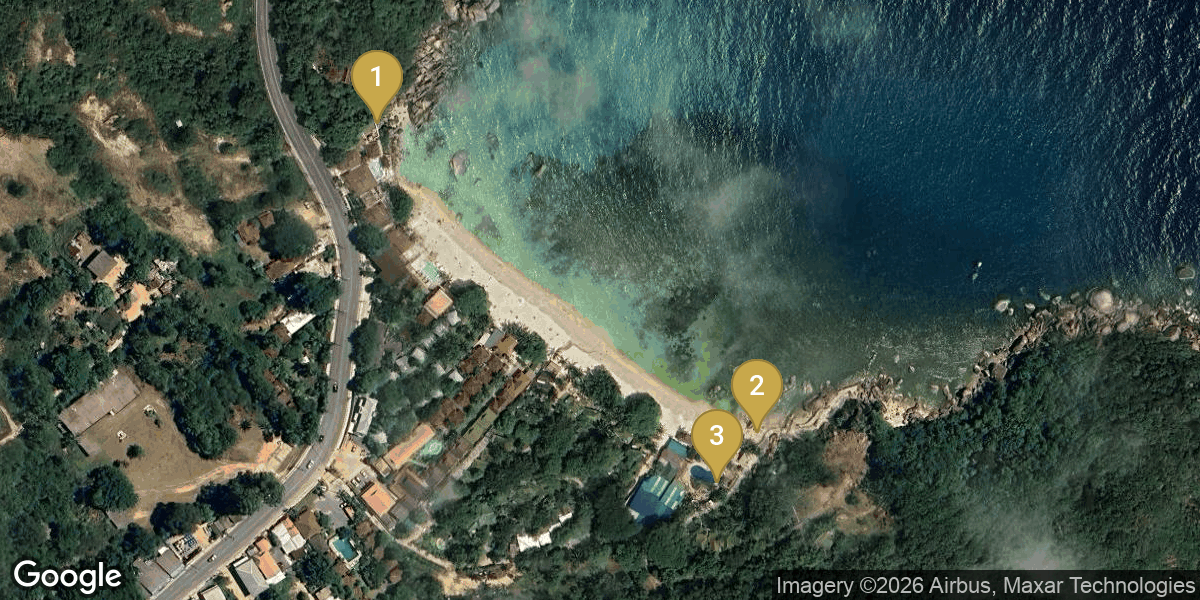
Silver Beach, tucked between headlands on the south east coast, sits within this sheltered pocket of the island too. It doesn't mean the cove is immune to a shift in the weather, but it's part of why the Gulf side holds up better than the Andaman coast when conditions turn. If you want the full picture on the beach itself, including why the sunrise, not sunset, is the moment to plan around, the complete guide to Silver Beach covers it in detail.
Early summer: June, then Europe's holidays kick in
June is the genuine shoulder month on Samui, and it's worth having on your radar. The rain hasn't picked up yet, days still lean sunny with a shorter burst of showers some afternoons, and because it sits between the December peak and the summer rush, crowds and rates are noticeably lighter than either.
That window closes fast. Once UK, German and Scandinavian school holidays start in July, Samui gets busy again, in places as busy as the December peak, and hotel rates tend to climb rather than soften. If flexibility around the northern hemisphere's summer is the point of your trip, June on its own is the better bet than July or August.
The wet season: September to November
September starts to turn, and by October and November Samui sees its heaviest rain of the year, with November typically the wettest month on the island. That said, "rainy season" on Samui rarely means constant grey skies. Rain tends to arrive in shorter, heavier bursts rather than settling in for days, and plenty of travellers still get long dry stretches even in these months. What it does mean is lower prices, thinner crowds, and less certainty, which is a fair trade for some and a dealbreaker for others. We'd steer anyone planning boat trips, snorkelling days, or an outdoor wedding away from this window if the dates are flexible.
Matching the month to the trip
- First trip, want it simple: December to April. Least risk, highest prices.
- Value hunters who can handle a shower: June, or early December before rates climb.
- Budget is the priority and flexibility is fine: October or November, book refundable where you can.
- Diving and snorkelling focused: aim for the driest window, February to March, when the water around the island is at its clearest.
Where this fits with your stay
Weather is only half of finding the best time to visit Koh Samui for your trip. The other half is which property suits it. For an honest read on the beachfront resort side of things, see our Crystal Bay Beach Resort review, and if you're travelling as a family or want more space for a longer stay, the Crystal Bay Yacht Club review covers the villas in detail. We're generally not fans of writing around the rain, so if wet-season dates are the ones that work for you, we'd rather you know what to expect than oversell the sunshine.
Whatever the month, booking direct means you deal with the hotel itself, without the middleman. Check dates and book direct at Crystal Bay Beach Resort.